

How to Invest in Cold-Chain Logistics for Perishable Exports in Tanzania
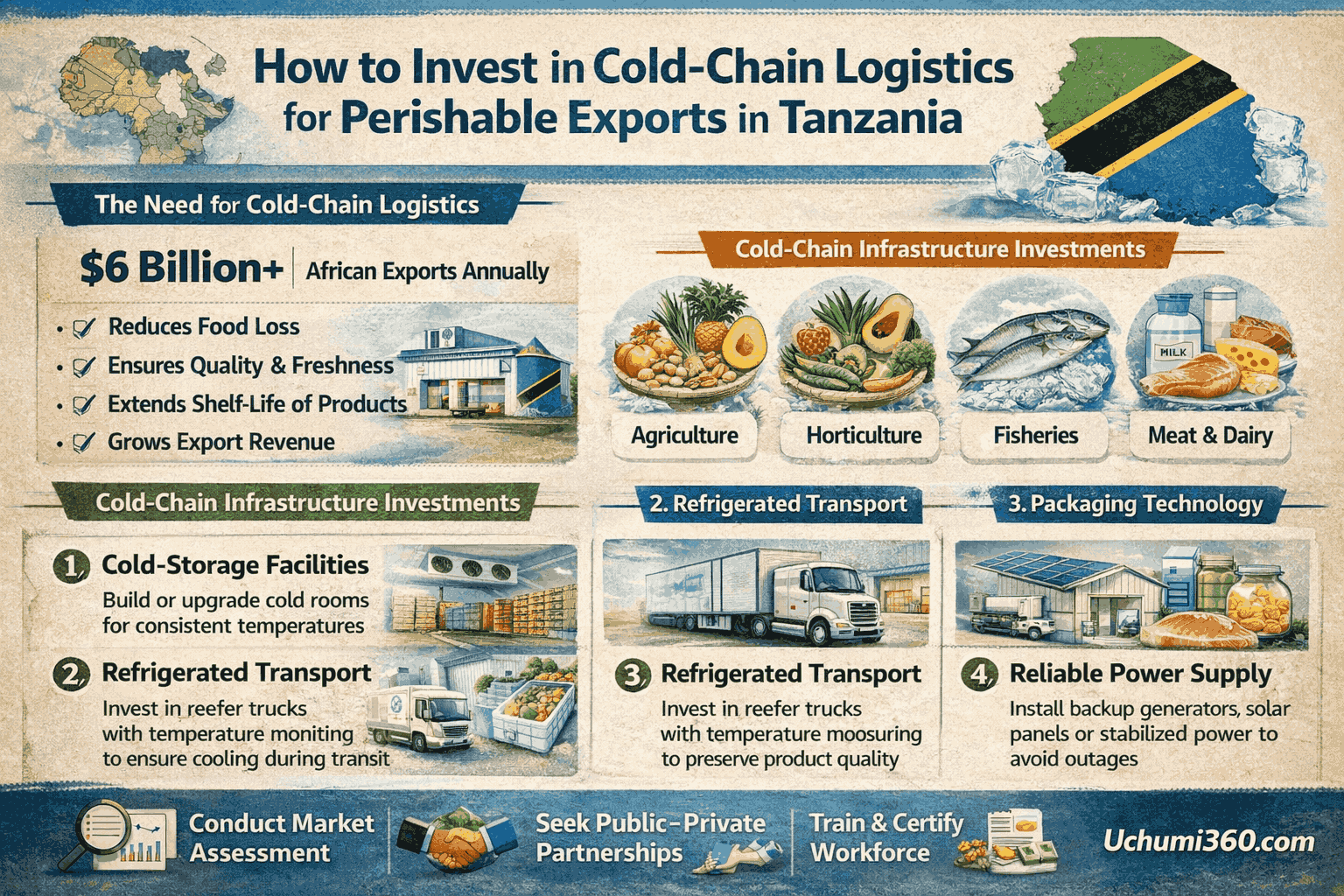
Cold-chain logistics is emerging as a critical enabler of Tanzania’s export competitiveness. With rising regional and international demand, investment in temperature-controlled storage, refrigerated transport, and pack-house facilities is becoming both commercially viable and strategically necessary.
Tanzania’s agricultural sector is growing rapidly, yet a large share of high-value perishable produce never reaches premium export markets in optimal condition. From horticulture and fish to meat and dairy, post-harvest losses remain one of the largest hidden costs in the export economy. For investors, this is not just a supply chain gap, it is a structured opportunity.
Cold-chain logistics is emerging as a critical enabler of Tanzania’s export competitiveness. With rising regional and international demand, investment in temperature-controlled storage, refrigerated transport, and pack-house facilities is becoming both commercially viable and strategically necessary.
Why Cold-Chain Investment Matters
Tanzania produces substantial volumes of fruits like (Avocados, Mangoes) Green beans, Flowers, Fish from Lake Victoria, Poultry and beef. Without proper cold storage and refrigerated transport, a significant portion of this produce loses value before reaching Dar es Salaam port or Julius Nyerere International Airport. Post-harvest losses can reach 20 - 40%, affecting: Agribusiness profitability, Farmer incomes, Export revenue, Market reputation
Cold-chain logistics strengthens: Export competitiveness, Food safety compliance, Quality certification for EU and Middle East markets, Supply chain efficiency.
For Tanzania to scale agro-processing and export diversification, logistics infrastructure must evolve alongside production growth.
Understanding the Cold-Chain Value Chain
Investors need to understand the full cold-chain ecosystem:
- On-farm pre-cooling systems
- Collection and aggregation centers
- Cold storage warehouses
- Refrigerated transport (reefer trucks)
- Airport and port cold handling facilities
- Export documentation and customs clearance
You do not need to own the entire chain. Many successful investors focus on one high-demand segment, such as pack houses or temperature-controlled warehouses near production clusters.
Entry Points for Investors
1. Solar-Powered On-Farm Cold Rooms
Regions like Arusha, Kilimanjaro, Mbeya, and Njombe are ideal for modular solar-powered cold rooms.
Benefits:
- Reduce reliance on unreliable grid electricity
- Scalable for smallholder cooperatives
- Supports rural development and climate-smart agriculture
This segment is suitable for investors seeking moderate capital exposure with measurable impact on reducing post-harvest losses.
2. Aggregation Cold Hubs
Cold storage hubs near production clusters allow:
- Grading and sorting
- Packaging for export markets
- Compliance with food safety standards
- Volume consolidation for better pricing
High-potential regions:
- Arusha (horticulture & flowers)
- Mwanza (fisheries)
- Mbeya (avocados & potatoes)
- Morogoro (fruits & vegetables)
Tips: Secure long-term supply agreements and consider PPP or joint venture models to reduce risk.
3. Refrigerated Transport Services
Reefer truck leasing remains underdeveloped in Tanzania. Reliable refrigerated transport improves:
- Supply chain reliability
- Export turnaround times
- Reduction in spoilage
- Overall logistics efficiency
Opportunity: Fleet financing or structured leasing arrangements can lower barriers for investors while meeting export demand.
Financial Considerations
Cold-chain investment requires moderate to high capital expenditure:
- Refrigeration equipment and insulated panels
- Backup power systems
- Temperature monitoring technology
- Land acquisition or facility leasing
Revenue streams are predictable due to:
- Long-term supply contracts
- Growing export demand
- Expansion of supermarkets and agro-processing
Tip: Conduct feasibility studies focusing on production volumes within a 50–100 km radius. Blended finance (equity, loans, incentives) enhances project bankability.
Regulatory and Policy Environment
Tanzania supports logistics investment through:
- The Tanzania Investment and Special Economic Zones Authority (TISEZA) incentives
- Special Economic Zones (SEZ) & Export Processing Zones (EPZ)
- Tax incentives for strategic infrastructure
- Growing AfCFTA market access
Compliance is essential for export markets:
- Tanzania Bureau of Standards (TBS)
- International food safety certifications
- Phytosanitary documentation
Investors should also assess:
- Electricity reliability
- Road and port infrastructure
- Customs and documentation processes
Risks and Mitigation
Key risks include:
- Power outages and energy costs
- Maintenance capacity
- Skilled workforce availability
- Currency fluctuations
- Seasonal production variability
Mitigation strategies:
- Hybrid solar-grid systems
- Maintenance contracts
- Workforce training programs
- Diversified client portfolios across crops
- Multi-year supply agreements
Strategic Investment Approach
- Focus on a high-output production cluster
- Partner with established exporters
- Secure supply agreements before construction
- Integrate digital temperature tracking
- Align with export financing institutions
Cold-chain logistics is not just storage, it is part of Tanzania’s broader export infrastructure strategy.
The Bigger Picture
Tanzania aims to grow non-traditional exports and strengthen its position in regional and global markets. Cold-chain investment supports:
- Agribusiness growth
- Export diversification
- Trade competitiveness
- Industrialization strategy
- Food security
With regional demand for fresh produce increasing, early investors stand to benefit from long-term structural demand. The transformation of Tanzania’s perishable exports will be driven not only by farmers, but by infrastructure investors who recognize that preservation equals profitability.